What an Authentic Brand Actually Is
When people talk about building an artist brand, the conversation tends to jump straight to visuals, content, or whatever seems to be working online.
Those things matter, but that’s not where the process should start.
I’ve long believed in an inside-out approach to branding; that an authentic artist brand isn’t a character you invent. It’s a deliberate expression of what’s already true about you, shaped so that people can recognize it, remember it, connect with it, and trust it over time.
What makes this challenging is that “being authentic” is a bit more complicated than just being yourself. You’re a whole person. You have different sides of your personality, different interests, relationships, experiences, and probably a few contradictions. Not all of these things need to be part of your public persona.
Authenticity is a relationship between identity and perception. You know yourself from the inside. Your audience doesn’t. They know the music, stories, images, performances, conversations, and other pieces of yourself that you consistently put into the world.
Brand development is really about figuring out which pieces should be there in the first place.
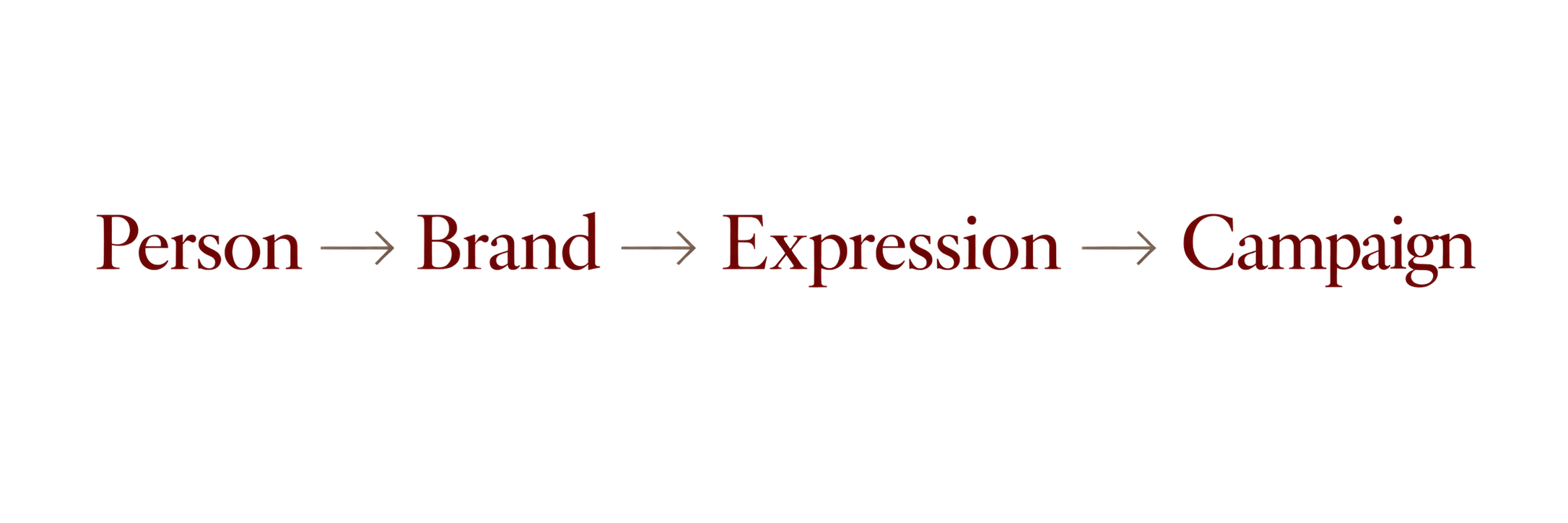
This is the framework that I use when helping clients explore the brand that best reflects their work. Start with the person. Build the brand from what you find there. Let that guide how you show up. Then use marketing to help the right people find it.
When this chain starts to run backwards, it gets very easy to build something that performs for a moment but never really feels like you.
Start With What’s Already There
Before worrying about what the artist should look like on their socials, start with understanding the person separate from the music. Which experiences shaped them? How do they see the world? What do they value? What makes them laugh? Where are the contradictions? What qualities already show up naturally in their songs, relationships, and the way other people experience them?
“Your strongest brand usually isn’t something you need to invent. It’s something you need to notice.”
At this stage, the goal isn’t to decide what the brand should be. It’s to notice the patterns.
What keeps showing up? What feels natural instead of performed? What seems to follow the artist from their real life into their creative life?
Trying to make brand decisions too early can push you toward choosing things because they seem marketable rather than because they’re actually true.
Your strongest brand usually isn’t something you need to invent. It’s something you need to notice.
From Truth to Meaning
If you do that work well, you should end up with far more truth than you could ever reasonably fit into a public identity. That’s a good thing.
“Select. Don’t fabricate.”
Authenticity doesn’t require putting every true part of yourself on display. Some things will sit close to the center. Some may deserve more emphasis because they make the artist more distinct or meaningful. Others can remain in the background without making the brand any less honest.
That’s where branding becomes an act of selection rather than invention.
Select. Don’t fabricate.
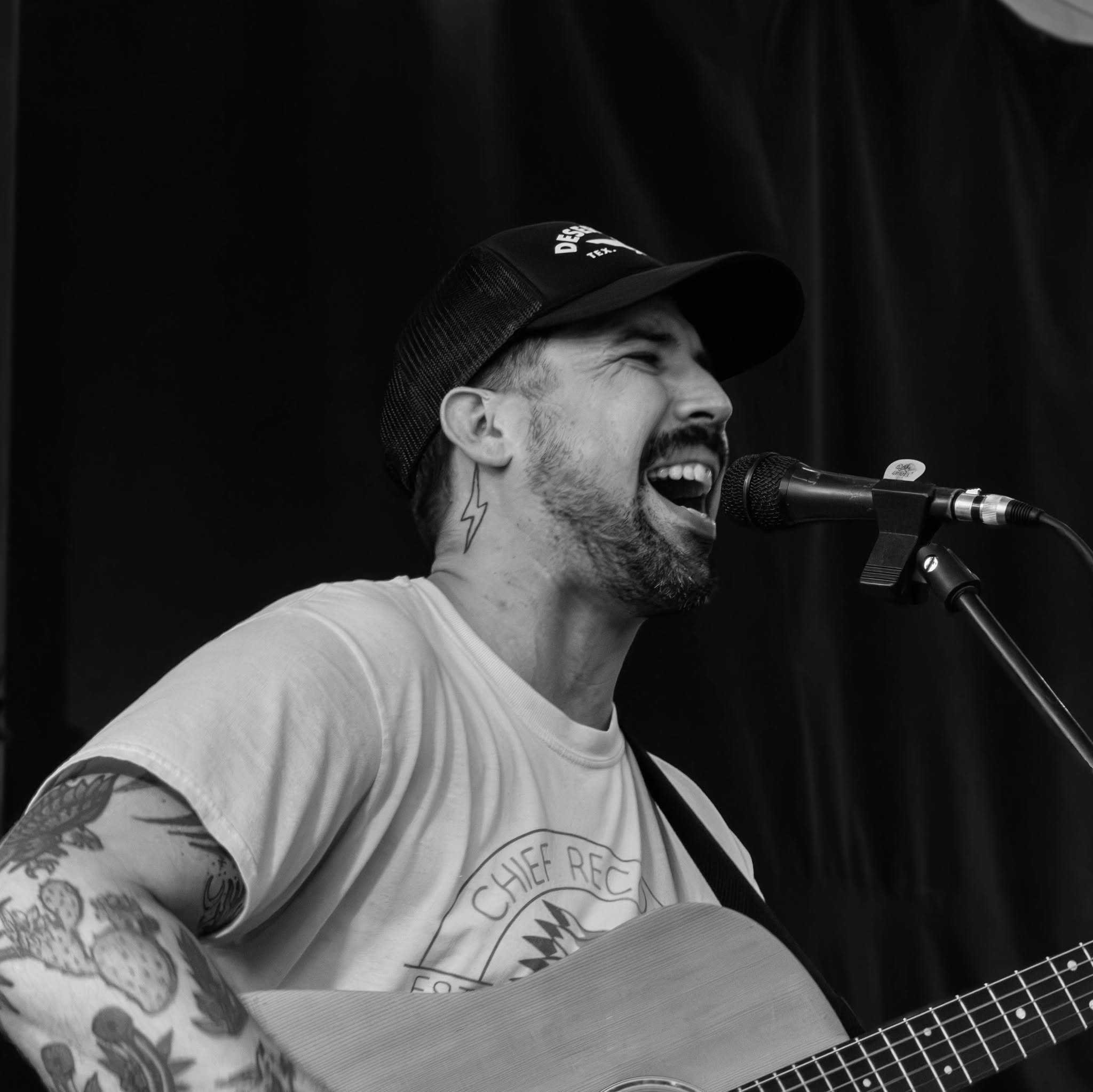
Brandon McLaughlin
The goal is to bring the strongest patterns into focus without flattening the artist into a character. And once those patterns start to become clear, there’s another question that matters even more: what do they actually add up to?
A collection of personality traits isn’t much of a brand by itself. What gives those traits meaning is the point of view underneath them – the ideas, experiences, tensions, and themes that keep showing up, and what they might mean to someone on the other side of the music.
That’s where resonance begins.
The strongest reaction to an artist isn’t always, “I’ve never seen anything like this.” Sometimes it’s, “That feels like me.” “I’ve lived that.” “Those are my people.”
When working with Fort Worth artist Brandon McLaughlin, the idea that eventually organized his brand was Hard-Won Joy. Life can be difficult, disappointing, and unfair, but the response is to keep showing up, take care of your people, hold onto your sense of humor, and find something worth enjoying anyway. We eventually summarized it with a simple idea: the hardship isn’t the brand. The response to it is.
That gives the brand more depth than a list of traits. It also gives somebody else a place to enter it.
The goal isn’t only to help people understand who the artist is. It’s to give the right people a reason to recognize part of themselves in the artist.
Build a World, Not a Formula
Once that foundation is clear, the visible parts of branding start to make much more sense. The photography, language, live show, artwork, content, clothing, environments, people, and other details around the artist become ways of expressing an identity that already exists instead of props being assembled in search of one.
But consistency doesn’t mean all of those expressions need to be identical.
Different settings can bring out different sides of the same brand. One of the clearest examples of this came while developing the launch strategy for The Ranch Chef. Instagram and TikTok were intentionally given different jobs. Instagram leaned more toward building identity and relationship, while TikTok leaned harder into discovery, utility, experimentation, and rapid learning. The expression that was used changed with the platform, but the foundation underneath it – People, Craft, Curiosity, and Play – didn’t.
The platform can change the expression without changing the person.
Brands Should Grow With the Artist
That same principle applies over much longer stretches of time, too. A brand shouldn’t freeze an artist at the moment it was defined.
People change. Their relationships, priorities, interests, circumstances, and creative instincts change with them. Treating a brand as a permanent identity can eventually turn it into a cage – something the artist has to keep performing even after they’ve grown beyond it.
Ben Rector is a good example of what healthy evolution can look like. His music has moved through different seasons of adulthood, relationships, nostalgia, fatherhood, family, and creative experimentation. The subject matter and expression have changed as he has, but the deeper qualities underneath the work have remained recognizable.
“Give the artist roots, not a cage.”
That’s what a durable brand should do. It should provide enough foundation for people to recognize the artist without locking them into a snapshot of who they were when the brand was first defined.
Give the artist roots, not a cage.
When Authenticity Becomes a Performance
There’s one more danger that comes after a brand starts connecting with people: the temptation to keep turning up whatever gets the strongest response.
A real trait performs well, so it gets emphasized. Then emphasized again. Eventually, one true part of the artist starts swallowing everything else.
That’s how authenticity can slowly turn into performance. A rough edge becomes manufactured toughness. A sense of humor becomes a gimmick. A connection to Texas becomes a costume. A playful personality becomes performed chaos.
Something doesn’t have to begin fake to eventually become a character.
Audience response and performance data can help keep a brand healthy, but only if they’re used in the right direction. If something genuine consistently connects with people, that’s useful information. Give it more room. Explore it. Learn from it.
Just don’t let one viral post, one successful format, or one audience reaction start deciding who the artist needs to become.
Let data sharpen the brand – not create it. Amplify the signal. Don’t manufacture the artist.
The Order Matters
That brings the whole process back to a simple order:
Start with the person. Build the brand from what’s genuinely there. Let that foundation guide how the artist shows up. Then use content, platforms, campaigns, and performance data to help the right people find it and learn what connects.
When that chain starts running backward, branding can quickly become an exercise in chasing attention. You start with what performs, build a persona around it, and eventually ask the artist to keep playing a version of themselves that may not even feel true anymore.
The goal is something more durable than that: a brand that’s real enough to create trust, clear enough to create connection, and flexible enough to keep growing as the artist does.